
A finance lead you share rather than hire.
The decisions that need a finance lead do not arrive monthly enough to justify a salary, and they do not wait either. This is the middle: budgets, cash planning and pricing, with one meeting a month where the numbers get explained and the next call gets made.
Who this is for
- You are making pricing and hiring decisions on instinct and want them checked.
- Cash is tight in a way you cannot yet explain.
- You need someone in the room who can argue with you about the numbers.
- A family business professionalizing its finance, so decisions stop living in one head.
- You have taken on an investor or a bank loan, and someone now expects numbers from you every quarter.
How it runs
- A budget and a rolling forecast you actually update.
- Cash-flow planning with the scenarios you are worried about.
- Pricing and margin analysis, by product or by project.
- A monthly review meeting, with the decisions written down afterwards.
What is included.
- Budget and financial forecast
- Cash-flow planning and scenarios
- Profit improvement and cost control
- Pricing and margin analysis
- Working-capital improvement
- Financial health review
- Support for management decisions
- Monthly CFO review meeting
The team behind it.
This is not one adviser with a spreadsheet. The CFO layer sits on top of the same engine that runs the rest of your engagement.
- The finance lead who sits in your monthly meeting, argues the numbers and writes the decisions down. The same person each month.
- The person who runs your close, keeping the entries current and the accounts reconciled that the forecast is built from.
- The reviewer who checks the month before it reaches either of you, so the meeting starts from numbers nobody has to doubt.
- The models, scenarios and board packs are built by the same team that builds them for our USA clients, to the same standard.
What is deliberately not on this page: VAT returns, tax filings and RJSC work. Those are licensed work and go to your licensed firm, with your records arriving filing-ready. A provider that bundles all of it under one roof is telling you something.
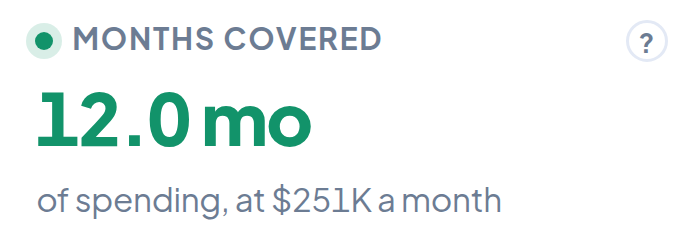
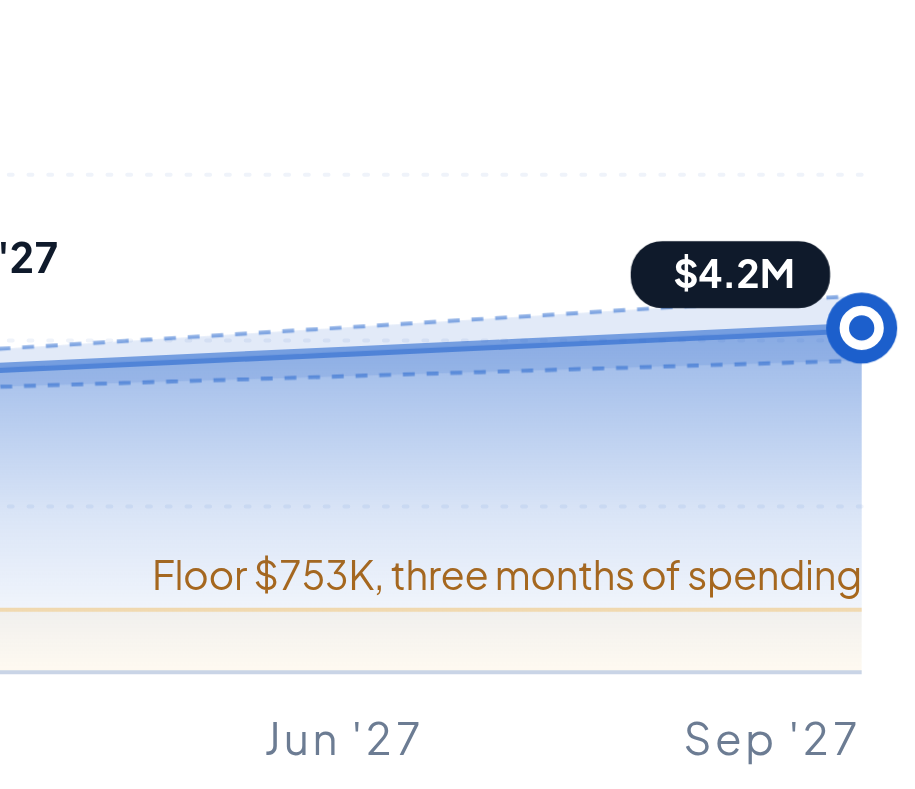
Cash today, what is added or spent each month, and where cash lands twelve months from now at the current pace, with the minimum your team set.

Cash on handOperating cash only. Reserves and anything already promised sit outside this number, so it is what you could actually spend this week.From the bank, tied back to the balance sheet at the close.
Net cashWhat the business adds each month after everything, including the months payroll runs three times. One unusual month does not move it.Money in less money out, from the closed accounts.
In twelve monthsAt the pace you are running now, with nothing new bought and nothing new raised. It is a starting point for a decision, not a promise.The projection carried forward at the current net.
The line, back and aheadSolid to today is cash you actually held at each month end. The band after it, not the line, is the forecast: it shows where cash lands if the pace runs a third slower, which is the case that decides whether you hire in the first half.The closed months are read from the accounts; the months ahead are drawn from the net you are running now.
The client portal, shown with sample data.
What the monthly rhythm actually looks like.
The pack is sent before the meeting, so the meeting is not somebody reading a report aloud. It is the hour where the decisions get made, and the decisions get written down afterwards, which matters more than it sounds. A quarter later, what was agreed in the room is still what was agreed.
The forecast is updated in that hour rather than admired. A rolling forecast that nobody revises is a document, not a tool, and most of the ones we inherit have not been touched since the month they were built.
The arguments worth having
- Whether your pricing survives contact with your actual costs, by product or by project rather than in total.
- Which customers are genuinely profitable once the cost of serving them is counted, because it is rarely the ones people assume.
- Whether a cost is genuinely fixed or is a choice that nobody has revisited.
- When to hire, tested against cash rather than against optimism, and what has to be true for that hire to pay for itself.
- The scenario you are actually worried about, modelled, so it stops being a feeling.
Keep your accountant. We check the work and read the numbers.
An accountant records what happened. A CFO-level eye reads what it means for the next decision: which work makes money, which clients actually cost you, and when the cash truly runs out. Those are different jobs, and almost no one person does both.
What the CFO layer adds
- Margins by product, client and month, so pricing stops being a guess
- A cash view that warns you before the squeeze, not after
- Someone in the room who can argue with you about the numbers
The easiest way to test this is a free finance review. No charge, and we tell you what we find, including the parts you will not enjoy hearing. Request a free finance review ›
Frequently asked questions
What does this cost?
A flat monthly addition on top of your monthly fee; tick Virtual CFO in the estimator and it shows with your numbers. It is an addition to the bookkeeping, not a replacement for it, because a forecast built on accounts nobody closed is a guess with a chart on it.
Is this a person or a service?
A named person, and the same person each month. You get a monthly review meeting and the decisions written down afterwards, so what was agreed in the room is still what was agreed a quarter later.
How much of their time do we get?
An agreed number of days a month, set before we start. If the work needed turns out to be larger than that, you hear it from us rather than discovering it in an invoice.
Do we still need our accountant?
Yes. This sits on top of the monthly work. The CFO role is arguing with you about pricing, cash and hiring. It is not doing the entries.
More general questions are answered on the contact page.
Get a free review of your accounts.
No charge. Send us what you have and you get a reply within one working day, saying honestly whether we can help and what it would cost.